
Cotton

Cotton
The technology employed and its vast experience enable Bom Futuro to produce an average of over 450,000 tons of cotton fiber per harvest.
The technology employed and its vast experience enable Bom Futuro to produce an average of over 450,000 tons of cotton fiber per harvest.
The natural product is called seed cotton. Cotton is a fiber that, after being extracted in the processing process, is called cotton lint, used to make fabrics and other products. The seed, also known as cottonseed, as well as the residue also called briquette, are generally used in animal feed. From crushing the seed, oil is extracted, used as a vegetable adjuvant and for the production of biodiesel, and cottonseed meal, used in animal feed.
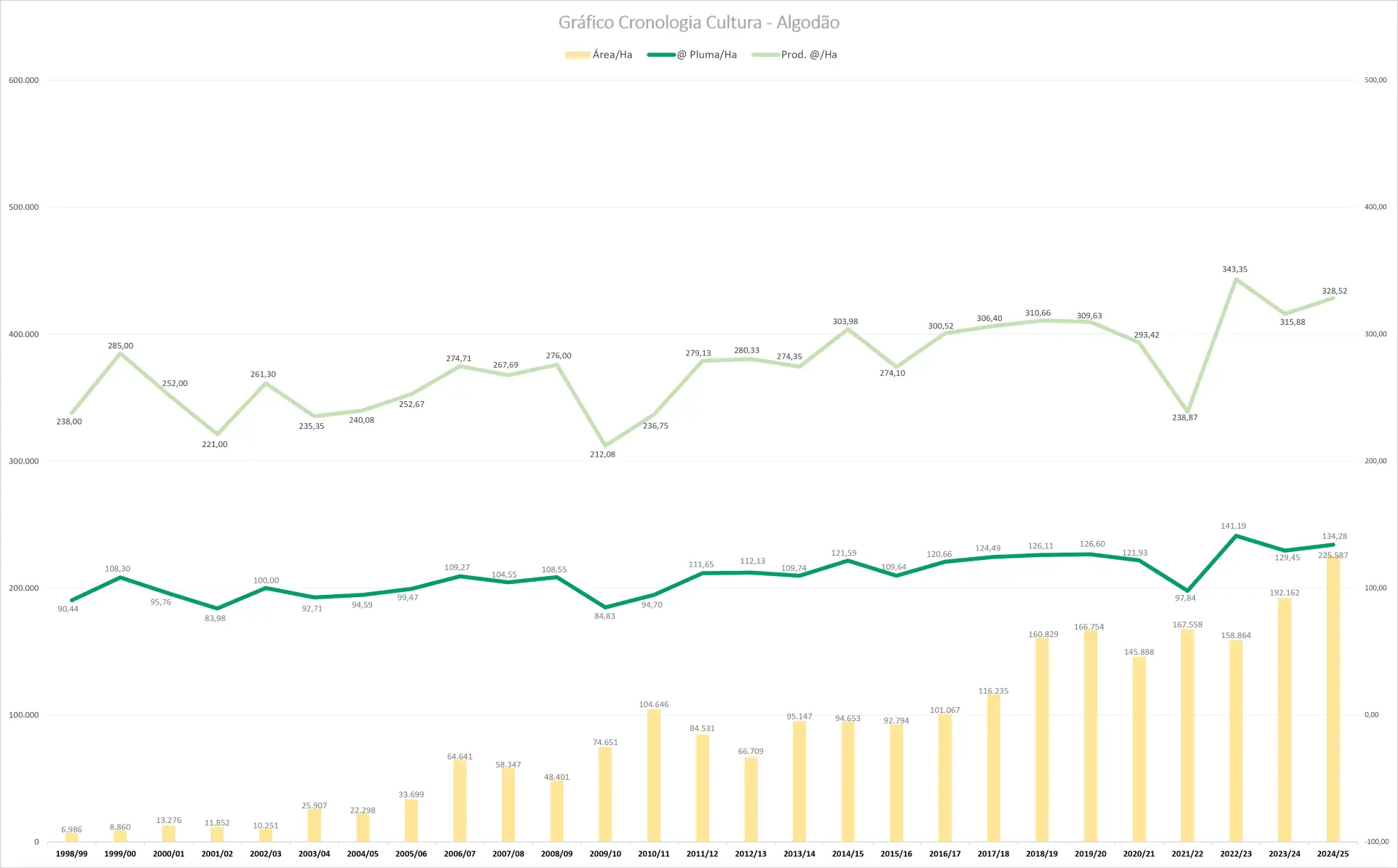
We began our journey in cotton cultivation in 1994. In the 2024/25 season, we cultivated 225,000 hectares of cotton, reinforcing our significant position in the crop, with an average productivity of 328 arrobas per hectare and an average equivalent of 134 arrobas of lint.
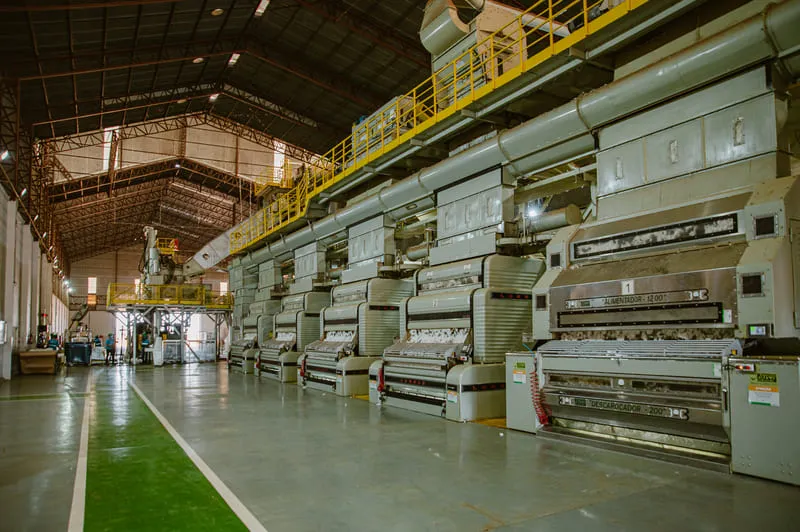
We also have 02 cottonseed crushers, from which degummed oil and cottonseed meal are obtained.
The electrical energy used in agro-industries is self-generated, obtained through small hydropower plants and photovoltaic plants. We are the largest Distributed Generation (DG) project in the country and self-sufficient in clean and renewable electrical energy. The pallets used to package cotton production come from our own reforestation.
We make the following products available to the market, derived from cotton cultivation

ABR - Responsible Brazilian Cotton
The ABR certification and BCI licensing process is centralized in the Algodão Brasileiro Responsável (ABR) program, as defined by benchmarking.
Better Cotton Initiative - (BCI)
By incorporating the BCI's minimum production criteria - which are mandatory - ABR also meets the requirements of the Better Cotton Initiative for granting the Better Cotton marketing license. For certification, the necessary compliance items of the production unit are evaluated, divided into eight criteria: (1) employment contract; (2) prohibition of child labor; (3) prohibition of work analogous to slavery or in degrading or undignified conditions; (4) freedom of union association; (5) prohibition of discrimination against people; (6) safety, occupational health and work environment; (7) environmental performance; (8) good agricultural practices.
ABNT - Technical Standards
The company identifies in the ABNT Conformity Mark the guarantee that it is acquiring compliant products and services, meeting the most rigorous quality criteria. ABNT Certification Body has a notable presence in the Americas, Europe and Asia, carrying out audits in more than 30 countries.